
The problem of scale...
and the moral tragedy of de-scaling

Why does so many Substack authors and articles ignore the scale and complexity of our global society, and offer little or no actionable plan on how to solve whatever problem/challenge/horror/outrage they are currently writing about?
I read a note today from Erald Kolasi, PhD1 about how “One of the founding myths of modern economics is the claim that money developed as a medium of exchange specifically to overcome the limits of bartering.”
He argues that this is “dead wrong”:
Anthropologists have long demonstrated that virtually all contemporary yet pre-modern societies, along with most ancient societies, distributed resources on the basis of credit and social trust, not tit-for-tat exchanges.
and goes on to posit that the underlying reason for this is:
Neoclassical theorists repeat this nonsense because it’s a way of justifying and excusing the grotesquely corrupt distribution of wealth under modern capitalism. The idea is simple: if what you get in life is determined by free and fair exchanges in an impartial market, then the resulting distribution of resources is also fair and, in some sense, “morally just.” This is the fundamental reason why neoclassical theory is obsessed with the concept of exchange: it’s a way of hiding and obscuring the social hierarchies and power relations that actually determine who gets what in life.
Now, I’m not an economist nor a physicist like Erald so I can’t speak to the accuracy of his analysis with any authority.
But what I can say is… so what?
Is he arguing that money is bad per se and we should have never moved past a barter economy, and that a barter economy is somehow more “just”, or “noble”, or “natural” for human societies?
Ignoring the naturalistic fallacy that probably lurks in there somewhere, I’d assert that we wouldn’t have the complex societies we have today if we HADN’T moved beyond barter. The fact that money (or some type of medium of exchange be it coins, gold, beads, marks on a clay tablet, paper money, digital money, whatever) has emerged independently in multiple different cultures around the world clearly shows that (1) there is a problem that needed to be solved and (2) money was a practical way to solve it.
And the problem here, IMHO, is one of scale.
And the problem here, IMHO, is one of scale.
As human civilisation moved beyond family groups and tribes of hunter gatherers, driven by the Agrarian Revolution, towards every larger (and static) villages, towns, cities and eventually the global economy of today, barter just didn’t scale. Too slow, too geographically limited, and requiring way too much information to be disseminated too widely in a period of time when very few people were literate and communication systems were primitive. It’s easier for me to exchange my goods/services for a placeholder token like money so that I can asynchronously decide at a later time what to exchange that value for than try to find the best barter exchange right now from what’s on offer around me (or within the scope of my information horizon). This is explored to some extent in Transaction Cost Economics (TCE) that talks about the different costs incurred in doing a transaction (search & information costs, bargaining costs, policing & enforcement costs). Having an efficient medium of exchange helps reduce some of these costs.
Yes, as Erald says I could rely on “on the basis of credit and social trust” but neither of these solve the problem at scale. Trust, as the saying goes, needs to be earned, usually over time by counterparties proving themselves trustworthy by faithfully fulfilling their part of repeated transactions. It’s too slow.
Yes, there are ways to accelerate this trust formation process - notable via religion i.e. preferentially trusting co-religionists but thus introduces a new set of problems (see too many wars, massacres and abuses to list). Another way is via personal transitive trust i.e. Person A trusts Person B, and Person B trusts Person C, so Person A is predisposed to trust Person C - but this doesn’t scale to what’s required either. How far can this chain stretch before the it breaks down and the opportunity/temptation/benefits to cheat on the deal becomes too great?
Personal “social trust” runs into the Dunbar’s Number hypothesis that humans’ have cognitive limits on how many stable social relationships a person can maintain, and this in turn creates a limit of effective “group size” i.e. too many people → can’t keep track of who is who and whether I like or trust them → group falls apart.
Erald goes on to argue, as quoted earlier, that this mistaken view of bartering leads to the mistaken belief in a “perfect market” and which in turn fosters a belief that if you don’t succeed it’s because you’re a loser and, conversely, that if I succeed it’s because I’m smarter, tougher, harder working and more morally worthy than you and hence, due to my empirically proven superiority, I should have a greater share of resources and a greater say in how society is organised and run (see Musk, E (2025) for an example).
The idea is simple: if what you get in life is determined by free and fair exchanges in an impartial market, then the resulting distribution of resources is also fair and, in some sense, “morally just.”
Psychologist’s call this “fundamental attribution error” and it’s PERVASIVE in the tech startup ecosystem and business leadership in general.
It’s a shame that too many successful people forget how much their success was due to luck rather than skill, and that they surround themselves with a coterie of sycophants rather than having someone whisper in their ear, like triumphant Roman Generals, the “memento mori” that they too are mortal. But I digress…
Putting the rest of Erald’s argument to one side for now, let’s get to the main point of this article i.e. my frustration with so many analysts and pundits (both off and on Substack) seemingly ignoring scale and complexity when they bemoan whatever issue that’s driven them to put fingers to keyboard and in whatever solution they then propose to fix it.
my frustration with so many analysts and pundits (both off and on Substack) seemingly ignoring scale and complexity when they bemoan whatever issue that’s driven them to put fingers to keyboard and in whatever solution they then propose to fix it.
Yes, in Erald’s case, mistaken ideas about how barter works might have resulted in “neoclassical theory [that] is obsessed with the concept of exchange: it’s a way of hiding and obscuring the social hierarchies and power relations that actually determine who gets what in life.” and that has negative outcomes for people’s lives and society as a whole.
But it’s disingenuous to sit at a keyboard in front of a computer connected to a world-spanning Internet, probably whilst drinking a beverage (ie coffee) that came from half a world away that was brewed in a machine that was likewise built and shipped from half a world away, and post a Note onto a third-party publishing platform (Substack) that sits atop a technological platform that’s built upon the science and technology that has developed over centuries and argue that “Anthropologists have long demonstrated that virtually all contemporary yet pre-modern societies, along with most ancient societies, distributed resources on the basis of credit and social trust, not tit-for-tat exchanges.” whilst ignoring that fact that none of the things that enabled him to write that would exist if we HADN’T moved past “distributed resources on the basis of credit and social trust” and built a far, far, more complex society because of it.
Ok, so maybe the world would be better, and people would be happier, if we’d never moved past a hyper-local barter-based economy. But, so what?
Sure, most likely the world would have about 8 Billion fewer people in it, infant mortality would likely be 100x to 1000x higher than today, and we wouldn’t need to worry about climate change because we never learnt how to use fossil fuels at scale, but whilst that’s an interesting thought experiment it’s hardly relevant to where we find ourselves today, in our incredibly interdependent, complex, global society.
Or is it, in fact, very relevant?
When you start to read about the impacts of climate change and overconsumption , and the possibility (probability?) of “Collapse” (with a capital C), you very quickly find that the consensus view of the “best” survival strategy for the collapse of modern technological society is… a supportive, hyper-local barter-based economy formed of Local Community Networks, Cooperatives, etc.
The myth of the uber-prepared but solipsistic “prepper”, so beloved by TV dramas and the onanistic, anti-social men who can’t wait to splurge themselves in an orgy of violence once the restraints of society are removed, is just that - a myth that bears no relation to any viable strategy for survival beyond your own miserable existence.
Overwhelmingly, the evidence shows that “mutual aid”, built on “social capital”, are the real-world responses to disasters and offer a far more viable strategy for long-term survival that some fictional post-apocalyptical hellscape of lone survivalists or marauding mutant hordes.
But discussion of the collapse of global scale, complex, modern society and the (perhaps) reversion to a more “human scale” society raises a huge number of moral questions.
So, do we just wait for things to fall apart and 90%+ of the human population to die of starvation, heat stroke, rising sea levels, and all the other horrors of climate & overshoot-induced collapse?
Or so we seek to “degrowth” society to a level that doesn’t exceed the carrying capacity of the planet?
What does that mean for the (capitalist) economy that modern society is so invested in?
How do we decide who lives and who survives in this degrowth future?
Who decides?
What criteria would we even use?
Is the use of coercive force to compel people to accept degrowth “moral” if it leads to greater overall survival and happiness (or is that just Utilitarian bullsh*t?)?
Should we “accelerate” the degrowth agenda whilst we still have time and/or because the faster we do it the lesser the long-term overshoot of the biosphere?
How do we balance out the (current and historic) consumption of different countries? Should a country that currently proportionally consumes “5 Earth’s Worth of resources” (the USA) be treated the same as a one that consumes just under 1 (Chad, 0.98 Earths)?
Scale is the constant problem that can’t be ignored, as much as it seems many leaders and political movements seek to do so.
The Authoritarian movements, e.g. MAGA that seemingly want to return to “the good old days” of some mythical 1950s when men were men, women were “tradwives”, LGBTQIA+ didn’t exist and non-Whites “knew their place”, ignore the fact that the global population then was 2.5Bn (not 8Bn+), the US GDP was 1/8th it was today (~USD$3tn compared to USD$24tn), China’s economy wasn’t even worth discussing, and ~80% of the people in Western societies didn’t have access to the sum total of human knowledge in their pocket AND real-time communication to pretty much anywhere.
The “good old days” are long gone (and were never that good anyway, except for a privileged few) and what worked then would fail miserably in the face of modern scale and complexity, anyway. It’s just the same, lame, “Argumentum ad antiquitatem” aka “Appeal to Tradition” fallacy re-warmed out of mid-20th Century leftovers.
If your argument and/or solution isn’t relevant to the scale and complexity of the modern world then it’s a lovely thought experiment to consider if we have some spare time in between trying to save democracy and preparing for the collapse of the biosphere, but it’s not the intellectual tour de force you might think it is…
And if your solution is “controlled degrowth” or “accelerated collapse” to get society (and population levels) back to a scale where your solution *IS* viable, then you can’t just wave your hand and skip over the moral dilemmas and tragedies that this implies… “I think you need to be more explicit here in Step Two…”.
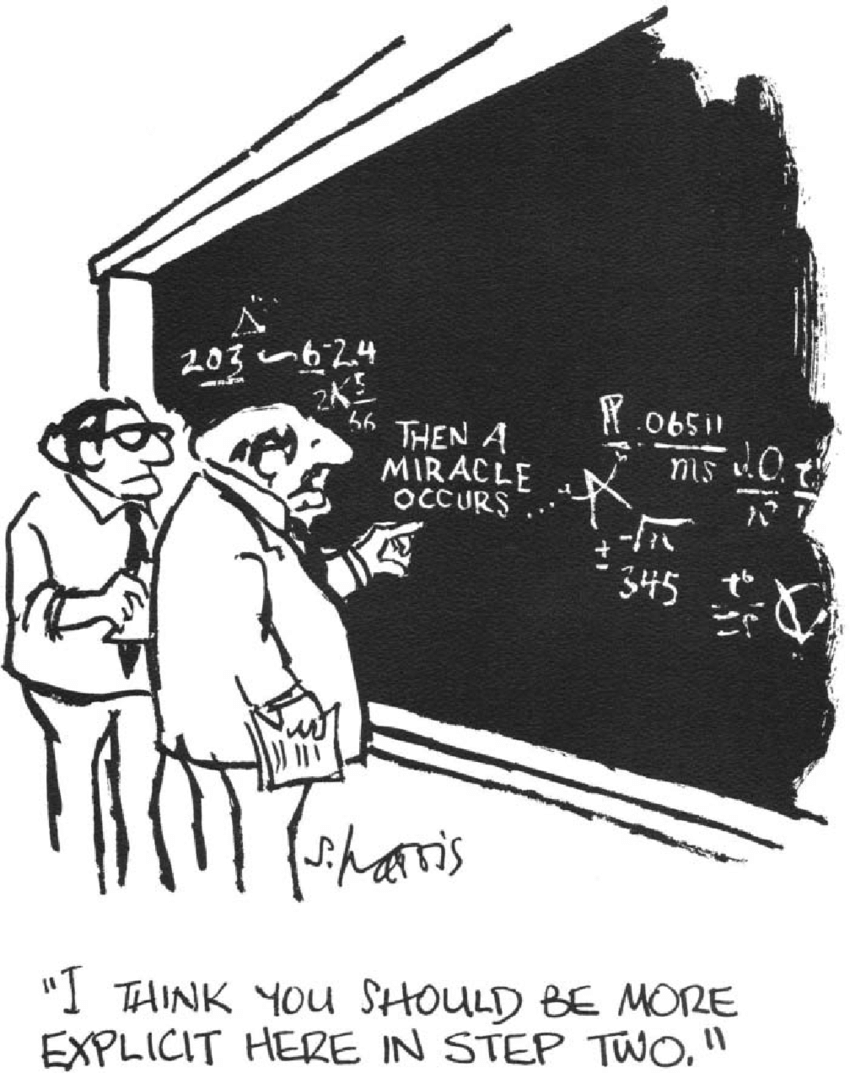
I must apologise to Erald in advance here because I feel like I’m dunking on him unfairly. I find his arguments interesting, it’s just that his note happened to be the straw that broke the camel’s back as it were. Sorry!
Hi Stephen,
Thank you for your reply. There are a few misconceptions I wanted to address in this post. First, and most important, the argument I was making was that we never had economies based on barter to begin with. You are instead asserting, without any evidence whatsoever, that we transitioned from bartering to other economic states to overcome problems of scale. But this argument only holds assuming that our earliest economies were indeed based on bartering, which is very unlikely given everything we know. As I explained in the post, our earliest economies were almost certainly based on social credit, trust, and ritual gift exchanges. The idea that our ancestors were bartering left and right to get what they wanted is a myth. Anthropologists like David Graeber and Richard Lee have long explained how we used to get stuff before the rise of civilization: by simply asking for it. You would ask someone in your community for a spear, they would give it to you on demand, then later you'd be expected to either return the spear or give back something else considered valuable by the community. But there was no tit-for-tat exchange, no process resembling tatonnement of any kind. These were, in effect, rudimentary credit systems based on debts and obligations. No bartering necessary at all.
Now let me briefly address your argument about scale. First, your accusations against me relating to scale are a sign that you're not familiar with my work at all. The first chapter of my book, The Physics of Capitalism, is literally called "Growth and Scale in Economics." Second, there are many examples of complex civilizations that efficiently allocated resources without using prices at all. Andean civilizations in South America, such as the Tiwanaku and the Inca, developed complex states and empires without the corresponding rise of a large merchant class. The state controlled the distribution of resources, handing out food and equipment as necessary, and people usually paid taxes to the government in the form of labor. Based on anthropological data, these systems thrived for centuries and they appear to have worked efficiently, in the sense that they consistently avoided extreme resource shortages. So it's just not true that you need money to have complex civilization. Third, even in ancient civilizations where money did arise and was used in various ways, credit systems still coexisted and even dominated, as Graeber and others have shown with Ancient Sumer. You want to portray a relationship of mutual exclusion between these two that simply doesn't exist. In reality, money and credit are synergistic phenomena, and money emerged as a way to further refine and entrench credit systems, not replace them. Fourth, you argue that credit systems cannot overcome problems of scale, but you have a very limited conception of what constitutes social credit and trust in the first place. You seem to think that social credit is a localized phenomenon about trusting your neighbor down the street, whereas in reality social trust can come in many different forms, up to and including trust in a broader social or political system. Once you recognize this critical distinction, it becomes easy to see how social forces like hierarchy and power can overcome Dunbar's scale constraints. When hierarchies form, interpersonal communications can be highly restricted to high levels of leadership, then social messages are transmitted down the chain of command until they reach the masses. Fifth, the plot thickens and the story is actually far more complicated, as anthropologists like Graeber and Wingrow have argued in The Dawn of Everything that you don't even complex hierarchies or dictatorial regimes to get complex societies and civilizations. You can get variations of these complex societies through more decentralized networks, albeit with various levels of hierarchical structure.
I could go on and on, but I think I've made my point. There are lots of interesting issues to think through in this discussion, and I would recommend some of the anthropologists I've cited here to start grappling with them.